
VANK announced on May 18, 2026, that its analysis of African country descriptions listed in Naver Knowledge Encyclopedia revealed serious problems involving information bias and imbalanced representation among individual African nations.
VANK said it conducted a comprehensive review of encyclopedia entries covering 18 African countries where South Korea currently maintains diplomatic missions. According to the organization, the findings showed that information on many countries remained heavily shaped by Western-centered perspectives or disproportionately focused on negative images.
The organization explained that the study was designed to move beyond viewing Africa as a single, uniform entity and instead recognize the continent’s 54 nations as independent societies with distinct histories, cultures and social contexts.
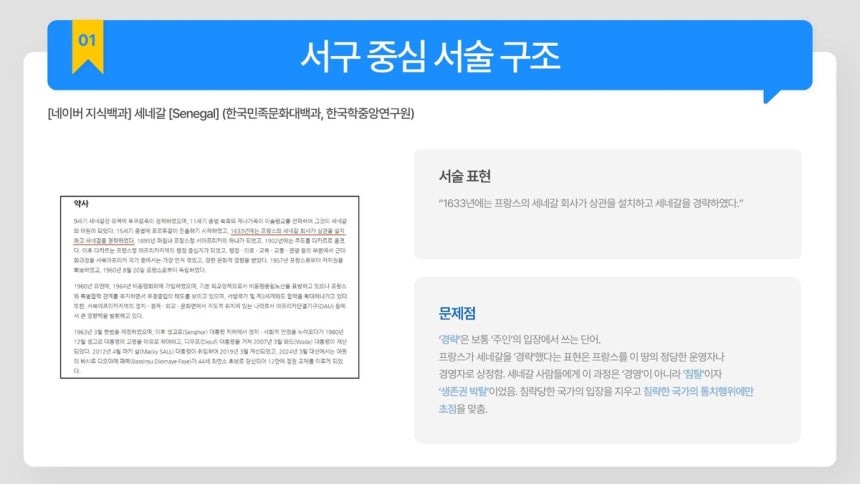
The analysis found that descriptions of the history and culture of several African countries were structured largely through the lens of European colonial powers. In the case of Nigeria, historical narratives were centered heavily on Britain, while indigenous historical systems such as the Kingdom of Benin and the Sokoto Caliphate received comparatively limited attention. Descriptions of Gabon were also found to contain Eurocentric expressions portraying African food culture as something completed or refined through French cuisine.
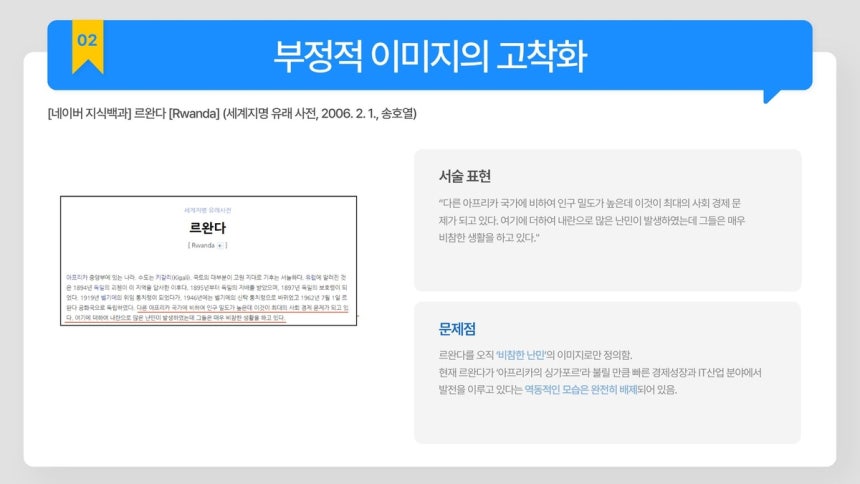
VANK further noted that several country profiles repeatedly emphasized negative themes such as poverty, civil war, refugees and dictatorship. Ethiopia was described largely through images of underdevelopment and poverty, while Rwanda was primarily portrayed through civil conflict and refugee-related issues, failing to sufficiently reflect contemporary social changes and development.
Entries on Côte d’Ivoire, Uganda and Angola were also found to place heavy emphasis on political instability and civil wars, while offering relatively limited information on culture and society.
The organization additionally identified numerous cases in which colonial rule and structural historical factors were insufficiently explained in discussions of past conflicts. In the cases of Nigeria and Rwanda, internal conflicts were described primarily as ethnic confrontations without adequately addressing structural causes such as the “divide and rule” strategies employed by imperial powers during the colonial era.
VANK also said that descriptions of Senegal’s independence process failed to sufficiently reflect local anti-colonial resistance movements and cultural activism led by Senegalese people themselves.
By contrast, Ghana, Kenya and Tanzania were cited as relatively balanced examples, with information presented across politics, society, culture and tourism. Tanzania in particular was praised for introducing a broad range of topics — including natural environments, traditional culture and tourism — without relying excessively on negative imagery.
Based on the findings, VANK said it plans to pursue cooperation with African diplomatic missions in South Korea. The organization intends to share the results of its review of Naver Knowledge Encyclopedia and gather feedback from African countries regarding the historical, cultural and industrial subjects they consider important in order to improve standards for country descriptions in digital spaces.
VANK Director Park Gi-tae said Africa can no longer be explained through a single image or narrative, emphasizing that each country possesses its own unique history, culture and development experience. He added that representations of countries in digital spaces should evolve in a more diverse and multidimensional direction.