
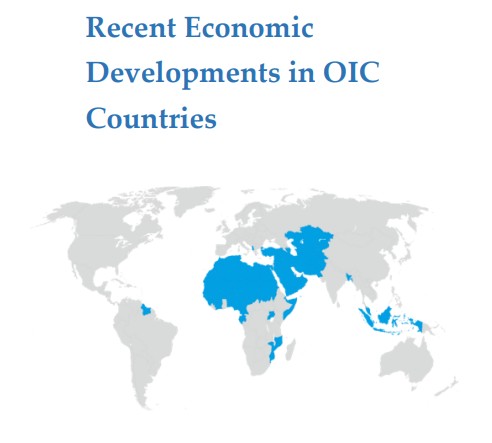
VANK said on November 20, 2025, that it has received a positive response from a statistics body under the Organization of Islamic Cooperation (OIC), marking the first such reaction from an international organization to its campaign to correct world maps that distort the size of Africa.
According to VANK, the Statistical, Economic and Social Research and Training Centre for Islamic Countries (SESRIC), an OIC-affiliated institution, replied favorably to VANK’s formal request to revise world maps used on its website and in its reports. SESRIC described the proposal as a “valuable opinion” and said it had begun an internal review, adding that it would positively consider improvement measures, including short-term actions.
This is the first time an international organization has officially responded to VANK’s request to correct the use of world maps that visually shrink Africa, while also signaling a willingness to review the issue positively. The OIC is the world’s second-largest international organization after the United Nations in terms of membership.
VANK previously examined the official websites of the OIC and SESRIC and found that the Mercator projection was still widely used in visual materials. These included key pages introducing the geography and statistics of the 57 Islamic member states, country profiles, overviews of member states, and various economic and social statistical graphics.
VANK pointed out that this practice is particularly problematic given that most North African countries are Islamic states and OIC members, yet Africa continues to be shown as smaller than its actual size due to the continued use of the Mercator projection. The group stressed that this issue requires prompt correction.
In its written response to VANK, SESRIC said it appreciated the “constructive feedback on the importance of fairer visual representation of Africa and other OIC member countries in relation to the use of the Mercator projection.” It added that it would internally review the proposal and assess how it could be reflected in its online statistical maps.
As a short-term step, SESRIC said it is considering adding a brief notice to pages using the Mercator projection to inform users of the potential for visual distortion. After completing its evaluation, the organization also said it would consider introducing alternative map projections in future updates, such as the Equal Earth projection, which more accurately reflects Africa’s true land area, as suggested by VANK.
Of Africa’s 54 countries, 27—exactly half—are members of the OIC. Nearly half of Africa’s total population is estimated to be Muslim, underscoring the deep historical and social ties between the continent and the Islamic world.
SESRIC is a key research body that studies social, economic, health, and education data across the OIC’s 57 member states, providing statistical maps and research reports widely used by international organizations, governments, and the media. These maps are often treated as international reference standards for understanding the realities of African and Islamic countries.
Park Gi-tae, head of VANK, said Africa, despite being one of the world’s largest continents, has been systematically reduced in size for centuries through distorted world maps. “When an international research institution like SESRIC, which provides statistical and analytical materials referenced worldwide, moves to improve map standards, it can become a historic turning point in restoring the international standing of Africa and Islamic countries,” he said.
Baek Si-eun, a youth researcher at VANK who led the global campaign on map reform, said Korea’s participation in improving perceptions of Africa goes beyond simple solidarity. “It is about correcting the very standards by which we view the world,” she said.
She added that distorted world maps still used by international organizations make Africa appear smaller than it really is, diminishing the region’s status and potential. “It is deeply meaningful for Korean youth to raise their voices to address this kind of structural distortion,” she said.
VANK described SESRIC’s positive response as a major achievement in its international campaign and said it plans to further strengthen its efforts to reform world maps and improve global perceptions of Africa.
The group also said it will continue to develop educational content and propose global actions to promote a fairer understanding of the world, not only among OIC member states but also across Africa, ASEAN, South America, and other regions.