
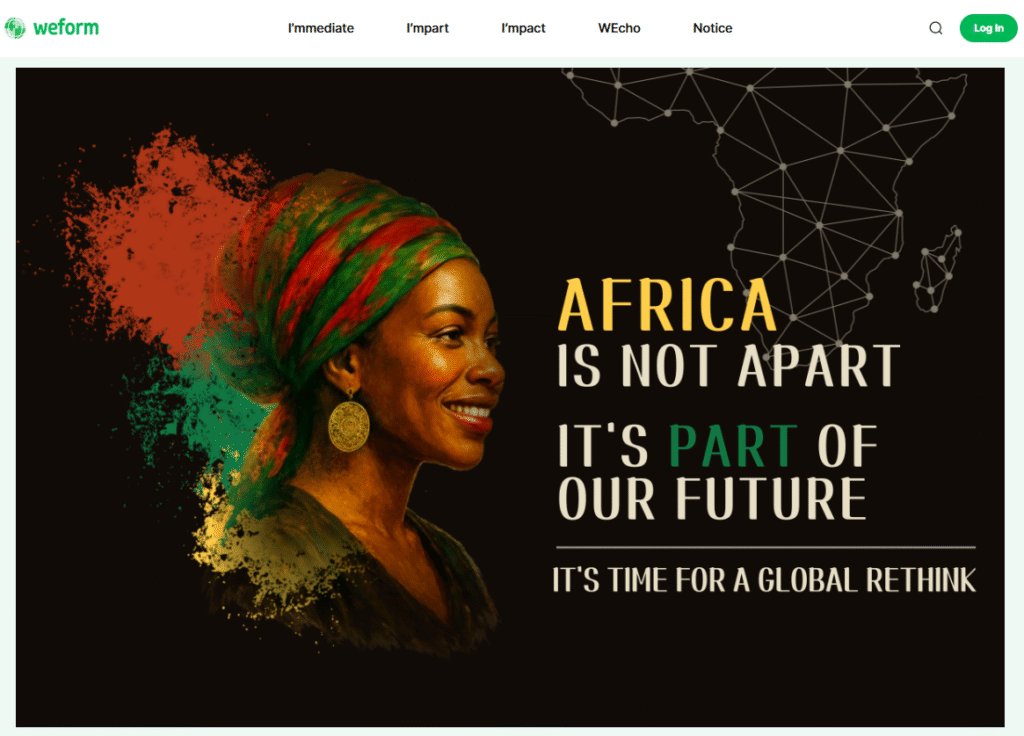
The Voluntary Agency Network of Korea (VANK) has officially launched Weform, an online citizen diplomacy platform that allows all Korean citizens to directly voice their opinions on global issues and participate in international policy discussions.
Expanding upon Korea’s domestic public communication platforms such as Woollim and Yeollim, Weform is designed to connect citizen-proposed ideas with global policy discourse at institutions like the United Nations. The platform aims to ensure that the voices of ordinary citizens are meaningfully reflected in international decision-making processes.
This initiative goes beyond Korea’s reputation as a cultural powerhouse with a global fan network of over 200 million Hallyu supporters. It seeks to position the country as a proactive problem-solver in global affairs and a guide in shaping international public opinion. To this end, Weform introduces a new framework for posting global forum agendas and collecting policy ideas from youth and young adults. Traditionally, young people have been passive participants in international meetings, but through Weform, they can now directly propose policies and draft statements for submission to international organizations.
The timing of Weform’s launch is particularly notable, as it coincides with the upcoming Asia-Pacific Economic Cooperation (APEC) Summit in Gyeongju. The platform provides a new channel for Korean citizens to engage in international dialogue just as world leaders gather in Korea. Through Weform, VANK envisions empowering citizens to take an active role in addressing global challenges, with particular attention to Africa-related issues.
Earlier this year, VANK launched the global “Promote Africa Correctly” project to correct misunderstandings not only about Korea but also about Africa, working to combat distorted perceptions and stereotypes. Its initiatives include training Global Ubuntu Ambassadors, leading a campaign to change the term “African Swine Fever,” and correcting discriminatory expressions in global encyclopedias and dictionaries. More recently, VANK proposed that international organizations adopt the Equal Earth map, which accurately reflects Africa’s true landmass—an effort to rectify distortions in traditional Mercator projection maps.
These efforts have naturally shaped Weform’s identity. From the design stage, VANK positioned the improvement of Africa’s global image as a core objective. Through Weform, the organization aims to help future generations overcome biases about Africa and grow into active participants in global discourse. The platform also seeks to deepen Korea–Africa relations by transforming them from a one-sided aid dynamic into a partnership grounded in mutual understanding and trust, built on shared historical experiences.
Looking ahead, VANK plans to expand Weform’s scope to regions such as Latin America and ASEAN, addressing a broader range of international agendas. With these developments, Weform is expected to become the world’s first youth-led global policy platform—marking a new era of Korea’s engagement in solving international issues.
VANK Director Park Ki-tae emphasized the importance of the initiative, stating, “The upcoming APEC Summit in late October is not merely an international conference but a critical moment for Korea to take the lead in shaping global agendas. Korea is uniquely positioned to champion new themes such as inclusive growth and global solidarity, beyond traditional economic discussions.” He added, “At a time when the world’s attention is focused on Korea, raising issues such as improving perceptions of Africa will help position Korea as not just a host nation but a country that guides the direction of the international community.”
Park further noted that Korea’s 200 million-strong Hallyu network represents “not just the popularity of entertainment, but a global platform of empathy and communication that transcends borders and race.” He explained, “When Korea advocates for causes like improving perceptions of Africa, this cultural network will serve as a powerful vehicle to amplify that message worldwide.”
VANK researcher Kwon So-young, who led the planning of Weform, remarked, “Most international forums and global discussions still operate from the perspective of developed nations—even major agendas such as climate change, digital transformation, and economic cooperation are dominated by their viewpoints. Weform seeks to amplify the voices of marginalized groups—minorities, refugees, and climate-vulnerable countries—embodying the true spirit of ‘inclusive participation’ that international meetings are meant to uphold.”
She continued, “Korea, while now a developed nation, carries the historical experience of having suffered under imperialism. This dual identity provides a foundation for moral leadership and empathy that Western powers often lack. Korea can bring together the voices of nations long excluded from the global order, forging a new axis of solidarity toward a more equitable world. It stands in a unique position—both understanding the pain of the past and embodying the potential for change.”
VANK researcher Koo Seung-hyun also highlighted the platform’s relevance to current global priorities. “Artificial intelligence (AI) will be a central topic at the Gyeongju APEC Summit, and Korea aims to rise as the world’s third-largest AI power after the United States and China,” she said. “To achieve this, Korea must go beyond mere technological competition and build an inclusive, fair AI ecosystem through collaboration with regions such as Africa and Asia. The Weform platform will be a vital foundation for fostering such cooperation and for strengthening Korea’s role as a leader in global discourse.”