
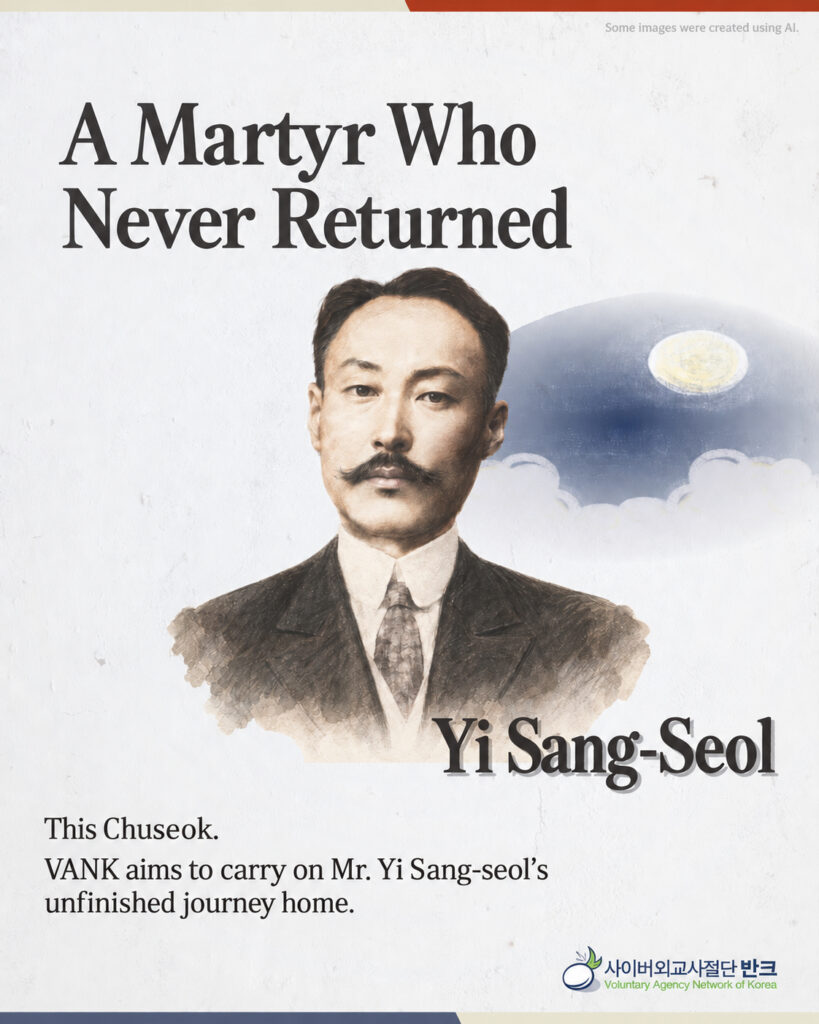
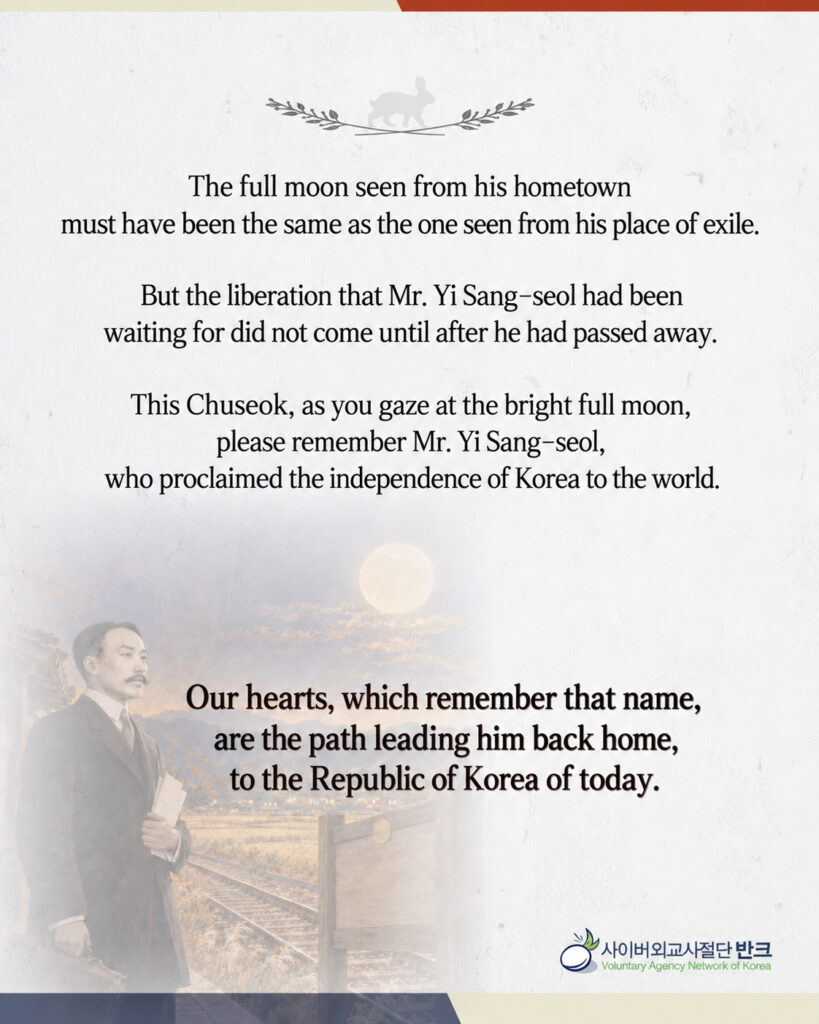
VANK has launched a campaign highlighting the lives of Korean independence activists who left their homeland but never returned to a liberated Korea, drawing attention to the journey home that remained an unrealized wish for them.
VANK said Sept. 27, 2026, that it had launched the campaign, titled “Redrawing Korea’s Journey Home,” ahead of Chuseok, the Korean harvest holiday. The campaign focuses on independence activists for whom the traditional Chuseok journey home remained an unrealized wish.
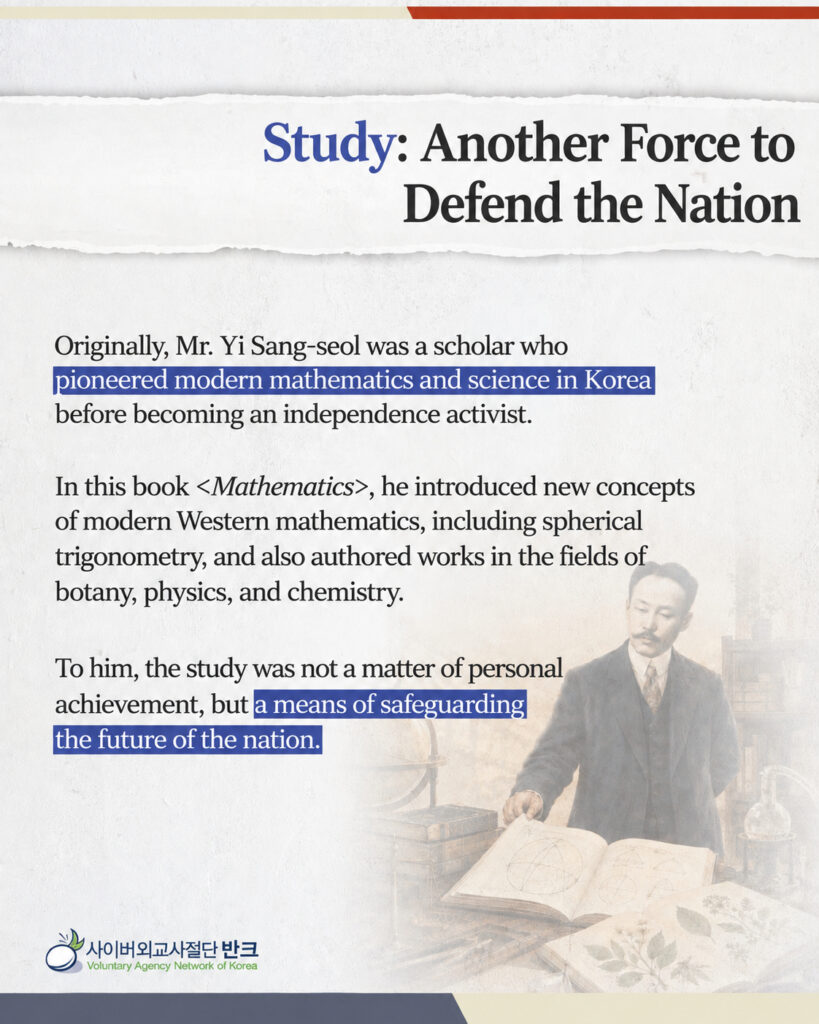
The campaign’s first featured figure is Yi Sang-seol (1870-1917), widely known for his role as a Korean special envoy to The Hague and also as a scholar who helped pioneer modern mathematics and science in Korea.
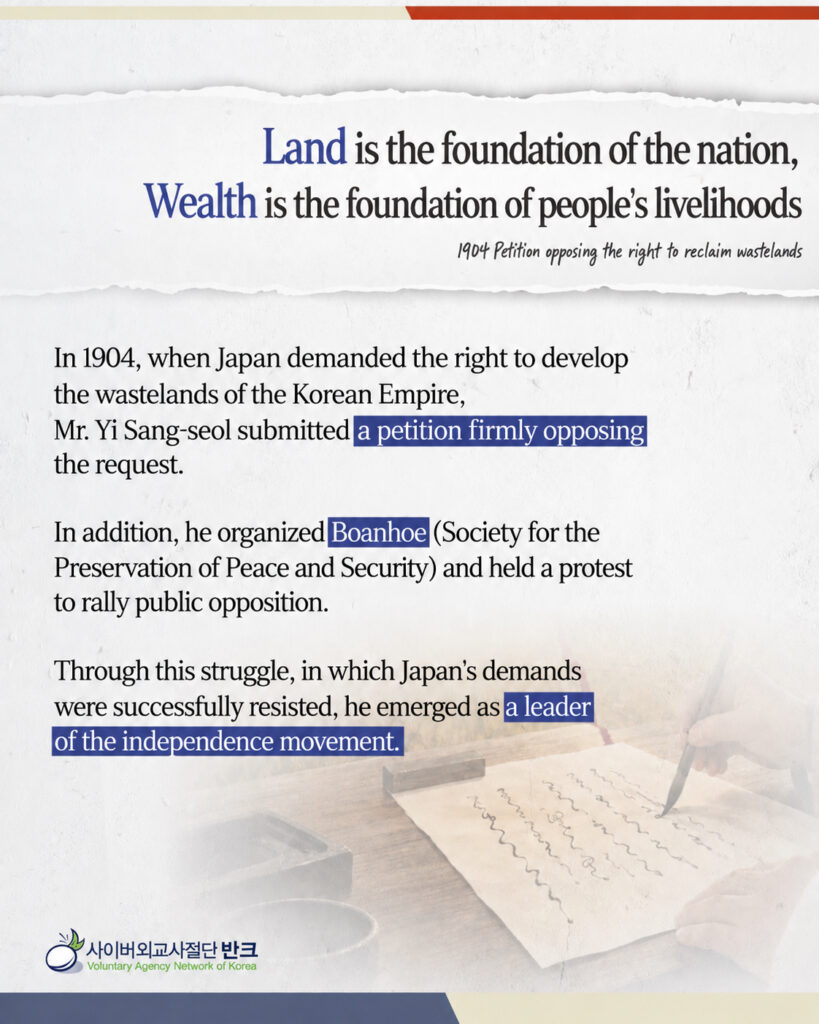
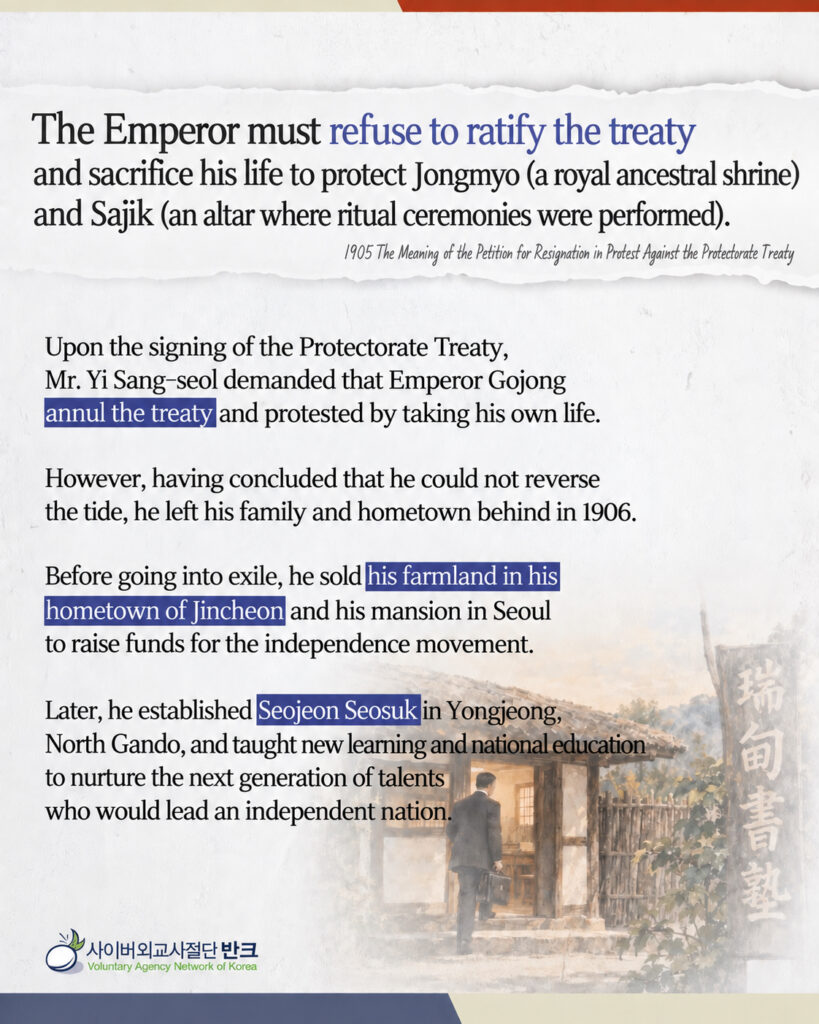
Yi strongly opposed Japan’s 1904 demand for development rights over undeveloped land and the forced signing of the 1905 Protectorate Treaty, which deprived Korea of its diplomatic sovereignty. He went into exile overseas in 1906.
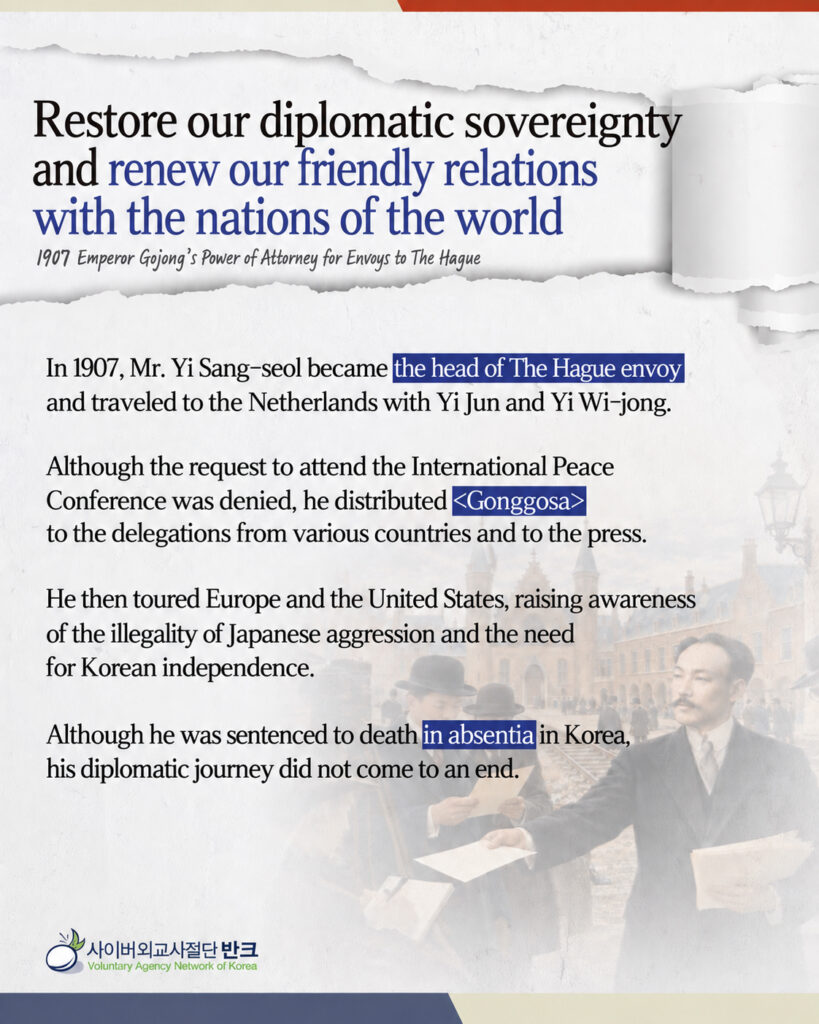
After leaving Korea, Yi established Seojeon Seosuk, a Korean national education institution in Longjing, northern Manchuria, where he educated young people who would go on to participate in the independence movement. In 1907, he was sent to The Hague in the Netherlands as a special envoy of King Gojong, together with Yi Jun and Yi Wi-jong, to inform the international community about Japan’s aggression against Korea.
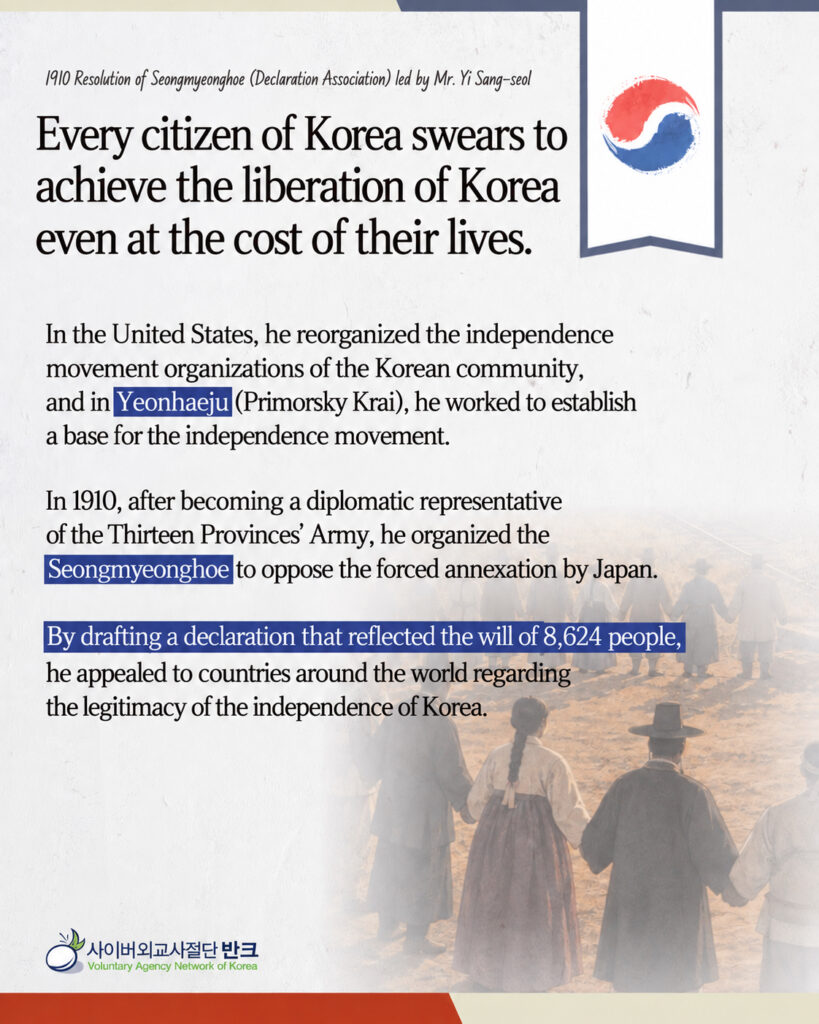
Yi continued his independence activities in the Russian Far East, participating in the establishment of Hanheung-dong as an independence movement base and in the activities of the Korean Liberation Army Government and the Sinhan Revolutionary Organization. His activities spanned education, diplomacy and armed resistance.
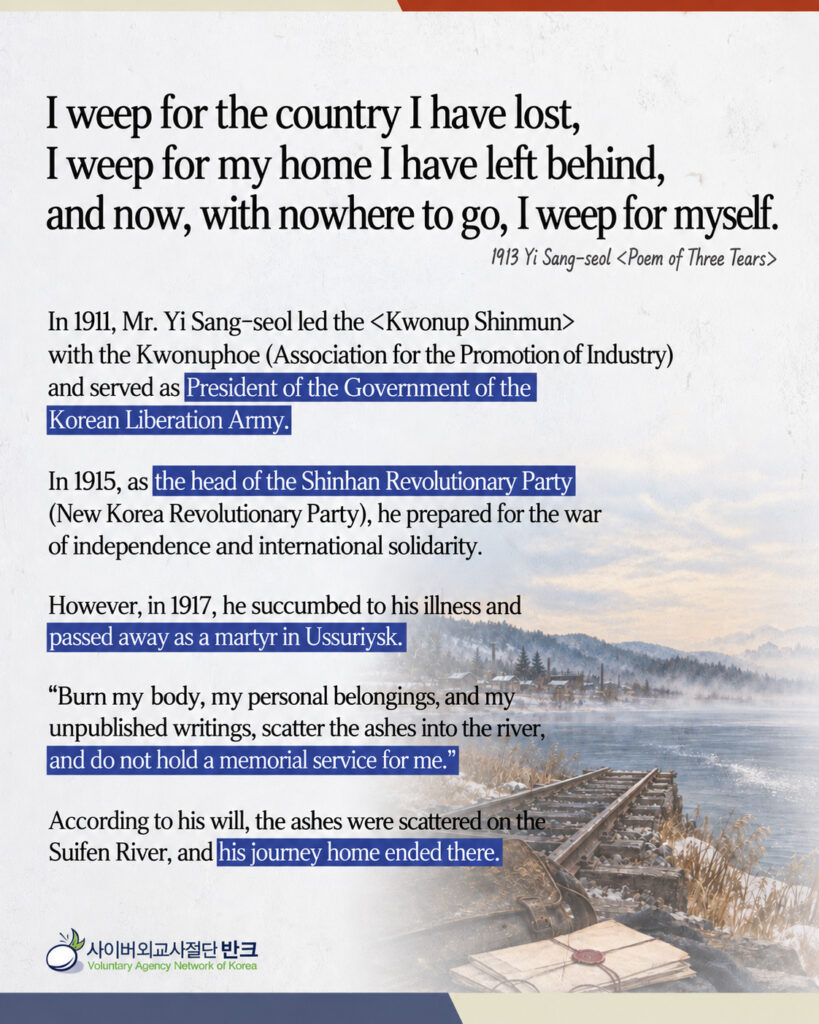
However, Yi died in Ussuriysk, Russia, in 1917 without seeing Korea regain its independence. In accordance with his final wishes — “Burn my body, belongings and writings, and do not hold a memorial service” — his fellow activists cremated his remains and scattered the ashes in the Suifun River.
VANK portrays Yi’s life not simply as a chapter in the history of the Korean independence movement overseas, but as a journey in which he gave up his own return home for the cause of Korean independence.
As part of the campaign, VANK plans to produce digital content in Korean and English featuring Yi’s academic achievements, his activities in the independence movement and his final wishes. VANK plans to use social media to raise awareness of Yi’s life and activities in Korea and abroad.
Park Gi-tae, head of VANK, said the campaign was intended to connect the sacrifices of independence activists with the freedom to return home that Koreans enjoy today.
“We are able to return to our hometowns today because of their sacrifices,” Park said. “When each of us remembers Yi, his unfinished journey home can be carried forward into the Korea of today.”