
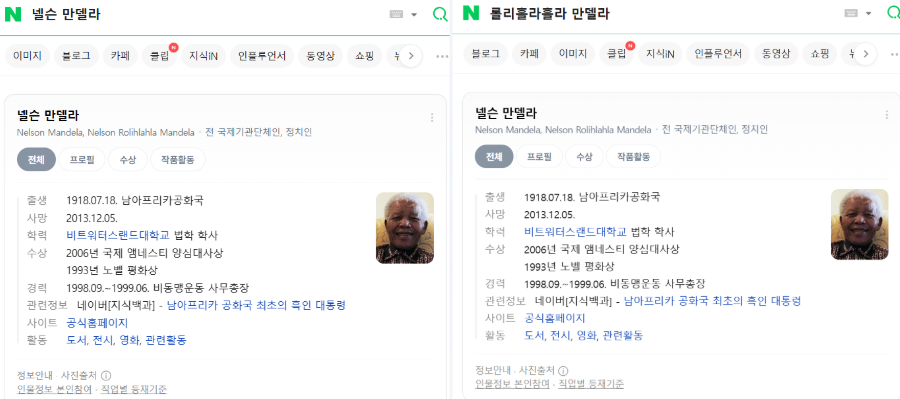
Voluntary Agency Network of Korea announced that it has achieved the inclusion of the birth name of former South African President Nelson Mandela in Naver’s profile information, along with improvements to its search service. The move is part of its “Correct Understanding of African Indigenous Languages” campaign, which aims to recognize and restore African place names and personal names alongside their Westernized versions.
VANK recently reviewed 10 cases of racially biased terms and descriptions in the “African race” entry of Naver’s Knowledge Encyclopedia and succeeded in replacing inappropriate expressions such as “Negro” with proper ethnic names. As an extension of its efforts to address structural distortions related to Africa, the organization has now led a tangible change in the digital information environment by ensuring the inclusion of Mandela’s original name, a global symbol of human rights and peace.
The latest outcome reflects VANK’s continued campaign to correct naming practices and build a knowledge ecosystem that respects African identity, with portal services actively adopting its recommendations. Previously, searching for “Nelson Mandela” on Naver displayed only the Western name “Nelson Mandela” in the profile, while searching for his original name, “Rolihlahla Mandela,” did not return the same profile information.
Following VANK’s request, the profile now includes “Nelson Rolihlahla Mandela,” and searches for “Rolihlahla Mandela” also lead to the same profile. This change goes beyond a simple update in naming, as it improves search accessibility and ensures that the original name is recognized on equal terms with the Western name within the system.
Mandela’s birth name, “Rolihlahla,” comes from the Xhosa language and means “one who pulls a tree branch” or “troublemaker.” However, during the colonial period, a Western name, “Nelson,” was assigned for convenience within a Western-centered education system and later became standardized worldwide. This case highlights a shift away from colonial naming practices toward a digital platform environment that respects the original names and cultural identities of African figures.
Kim Ryung-eun, a youth researcher who led the initiative, said that in local contexts, including the Nelson Mandela Foundation, Mandela is referred to by his birth name, and emphasized that Korean society and digital platforms should follow this approach of respect. She added that as Korean cultural content continues to gain global influence among 200 million fans of Korean culture, there is a growing responsibility to properly understand and respect other cultures. “This achievement goes beyond correcting a name and serves as an opportunity to demonstrate the maturity of Korea as a cultural leader that promotes a more accurate understanding of Africa,” she said.
Park Gi-tae said that the improvement of the profile service, following earlier revisions to encyclopedia entries, provides an important foundation for establishing a balanced view of Africa. He added that VANK will continue its efforts to restore the original names of Africa and promote accurate understanding in Korean society.
Meanwhile, VANK plans to continue reviewing Africa-related content across digital platforms, including knowledge encyclopedias, and carry out correction efforts to ensure the provision of balanced and accurate information.