
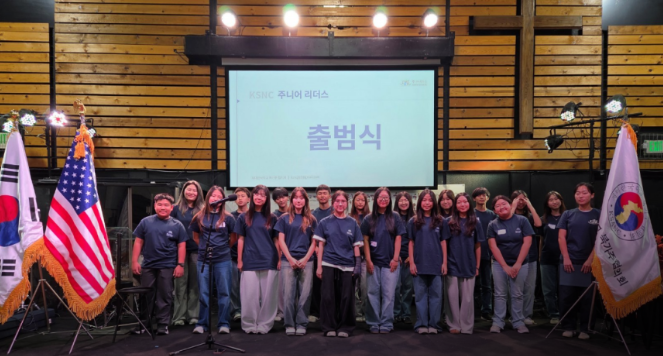
The Voluntary Agency Network of Korea (VANK), led by Director Park Gi-tae, and the Korean Schools of Northern California (KSNC), chaired by Kwak Eun-ah, held an online seminar on January 27, 2026, for Korean language school students in Northern California, marking the launch of a global promotion project to raise awareness of Jikji, a UNESCO Memory of the World.
The Korean Schools of Northern California is a federation of Korean schools in the region. Since its establishment in 1991, it has provided education not only in the Korean language but also in Korean history and culture, playing a leading role in fostering a sense of identity among the next generation. It currently consists of 28 schools, about 150 teachers, and approximately 1,000 students.
At the seminar, VANK researcher Kwon So-young delivered a lecture titled “Jikji Storytelling Strategies” for students who were unfamiliar with Jikji. She introduced ways to promote Jikji through interactive communication with global audiences, emphasizing empathy and mutual understanding rather than one-way messaging.
Kwon also provided a chronological overview of how Jikji has been recorded and presented around the world since its inscription on UNESCO’s Memory of the World Register in 2001. She then explained why VANK chose to focus on Jikji among many cultural heritage items, highlighting three key concepts: creativity, global connections, and challenging prejudice.
“Jikji is closely linked to the Gutenberg printing history that people around the world are familiar with, making it an effective cultural heritage through which Korea’s history can be introduced naturally,” she said. “It carries important meaning in challenging the perception that major world-changing inventions originated only in Europe and in addressing Eurocentric historical narratives and academic imbalance.”
Kwon further explained Jikji through an analogy involving Martin Luther King Jr. and Rosa Parks. “Just as Rosa Parks’ courage inspired Martin Luther King Jr. and helped drive social change against racial discrimination, Jikji, invented 78 years before Gutenberg, played a key role in advancing the spread of knowledge and the development of human civilization as a hidden pioneer,” she said. By introducing Rosa Parks and Jikji together as overlooked agents of historical change, she emphasized Jikji’s universal value and historical significance.
The seminar continued with a lecture by VANK researcher Koo Seung-hyun titled “The Challenge Taken Up by Youth to Introduce Jikji to the World.” She examined how Jikji is currently represented globally and outlined strategies for correcting misinformation.
Koo first introduced common types of errors found overseas. The most frequent issue is that Jikji, despite being the world’s oldest surviving book printed with metal movable type, is not properly recognized as such. Many foreign textbooks, encyclopedias, and websites continue to describe Gutenberg’s 42-line Bible, published 78 years after Jikji, as the world’s first metal-type printed book. In many cases, Gutenberg is described as having “invented” metal movable-type printing, presenting the development of printing culture solely from a European-centered perspective. Koo also noted that references to Jikji are often entirely absent, even in materials that discuss the invention and development of metal movable-type printing.
She then introduced practical methods for identifying Jikji-related errors in foreign materials. These included analyzing key words commonly found in erroneous statements, identifying recurring sentence patterns related to Korean printing culture, and using those keywords to search overseas websites more effectively.
Koo emphasized the importance of first checking whether textbooks, encyclopedias, and dictionaries include content on Jikji. If not, she said, it is necessary to closely examine Gutenberg-centered narratives and determine whether materials mention only Chinese movable-type printing or Gutenberg’s Bible, or whether Jikji is included as well.
She explained that once students learn to identify these error patterns, the next step is to write and send correction request letters to the relevant institutions or websites. She shared actual correction request letters used by VANK and explained their structure, adding that when Jikji is entirely absent, students can propose that information on Jikji be newly added.
Koo also introduced a real case in which an elementary school–aged VANK member discovered an error in Encyclopaedia Britannica describing Gutenberg as the world’s first inventor of metal movable type and sent a correction request letter. The request was accepted, and the wording was revised from “the world’s first” to “Europe’s first.” She described the case as a meaningful example showing how individual attention and action can lead to changes in major international reference works.
Following the seminar, Junior Leaders students will carry out a “Global Mission to Accurately Introduce Jikji.” They will study Jikji’s history and significance, review representative error cases, and plan their own Jikji awareness campaigns. They will also identify errors in textbooks, websites, and dictionaries and send correction requests, or propose adding Jikji-related content where it is missing.
VANK Director Park Gi-tae said, “The value of Jikji does not diminish simply because it is not widely known around the world,” adding, “Jikji is a cultural heritage that represents Korea’s 5,000-year history and culture and a symbol of innovation that advanced the spread of knowledge in human civilization.” He added that it was especially meaningful to see Korean American youth in Northern California view Jikji not merely as an artifact of the past, but as a cultural diplomacy asset for engaging with the world.
KSNC Chair Kwak Eun-ah said she was proud to see Northern California youth participate so enthusiastically in introducing Jikji to the world, adding that their creativity and passion would help share the depth and value of Korean culture with the international community. She also expressed her support for the Junior Leaders students as they continue to grow into global leaders.
Junior Leaders student Kim Ye-an said that participating in the project helped her gain a deeper understanding of Jikji as a historical artifact. “I was amazed by how advanced the technology was at the time, and I felt disappointed that its achievements were credited to someone else,” she said, adding that she hopes the project will help correct misinformation and allow more people to learn the true value of Jikji.